“Disappearing winter” paralyzes international research
Spitsbergen, April 2026. This year’s Arctic spring is going down in history as one of the most unpredictable and challenging for science. Three international LIQUIDICE research teams have faced challenges that would have been unthinkable just a decade ago. While the Polish team has been completely blocked by nature, partners from Norway and Italy are fighting for every inch of melting snow.
A paradoxical blockade: sea ice offshore, bare ground on land
The team from two Polish institutions: the Institute of Geophysics, Polish Academy of Sciences and the University of Silesia had planned to conduct key work in April in the area of the Polish Polar Station Hornsund. The plan was ambitious: precise measurements of snow water equivalent in the Fuglebekken catchment, as well as an innovative isotope experiment on the Werenskioldbreen glacier aimed at describing snow evaporation processes.
However, nature created a double barrier. First, the fjord was blocked by dense sea ice, preventing the ship from approaching and unloading the team and equipment. Second, since early April, the western coast of Spitsbergen has been experiencing a record thaw.
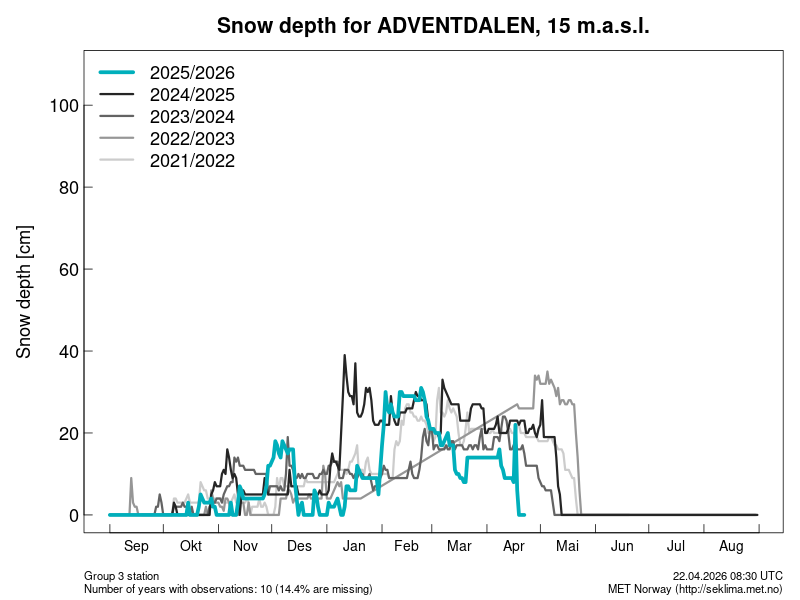
In the Longyearbyen area, thermometers showed +4°C, while the norm for April is around -15°C. Instead of 30 cm of compact snow cover, we have bare ground. This made it impossible to reach Hornsund by snowmobile, reports Dr. Bartłomiej Luks from IG PAS.
As a result, for the first time in decades, the Polish team has failed to reach the field and must rely solely on basic monitoring data transmitted by the overwintering staff at the station.
International Struggle for Data: “Water Is Everywhere”
The remaining two LIQUIDICE project teams, although still operational, have been forced to radically change their logistics. Norwegian scientists from NORCE: Robert Ricker and his team working in Adventdalen (near Longyearbyen), found the terrain almost completely devoid of snow. To even use snowmobiles, they must transport them by car far beyond the town, searching for surviving patches of snow. Their work, supported by drones (UAVs), is aimed at calibrating Sentinel-3 satellite data, which confirm the catastrophic condition of the snow cover. After a few days of struggling with (no)snow conditions, they need to abort their fieldwork plans.
University of Svalbard (UNIS) has cancelled all scooter operations until at least next week. But without new snow, it is unlikely that the field season will continue. We will return to Tromsø on Friday. – states Ricker.
Meanwhile, the Italian team from the Institute of Polar Sciences CNR (ISP-CNR) is attempting to operate in Ny-Ålesund, in northern Spitsbergen, where the situation is equally dramatic. Andrea Spolaor reports that “water is everywhere.” Meltwater ponds are forming on glaciers and in coastal areas, and the snow is completely saturated. However, the Italians are using these conditions to study Rain-on-Snow (ROS) events. When rain falls on snow it drastically alters the structure of the cryosphere and is one of the most serious indicators of warming.
The Future of Research Is Remote Sensing
Experts emphasize that documenting these “depressing” images of bare ground and waterlogged snow is now just as important as traditional glacier measurements. Eirik Malnes from the Norwegian institute NORCE highlights the need for a revolution in polar research methodologies.
“Traditional snowmobile expeditions in April are becoming too risky and unpredictable. In the future, we may need to plan them earlier, in mid-winter, although that comes with the challenges of the polar night,” Malnes notes.
The scientist stresses that this year’s crisis demonstrates how crucial it is to develop remote sensing techniques. Satellites and unmanned aerial vehicles are becoming the only viable way to monitor the Arctic as the weather window for human fieldwork rapidly closes.
This is not an anomaly – it is the new reality
The situation in Svalbard leaves little doubt about the direction of climate change. The Arctic is warming several times faster than the rest of the globe, and the disappearing snow cover is affecting not only scientific research, but also local ecosystems and tourism. Despite the logistical paralysis of one of its teams, the LIQUIDICE project is providing some of the most tangible evidence yet of how rapidly we are losing water resources that were once locked in the cryosphere.
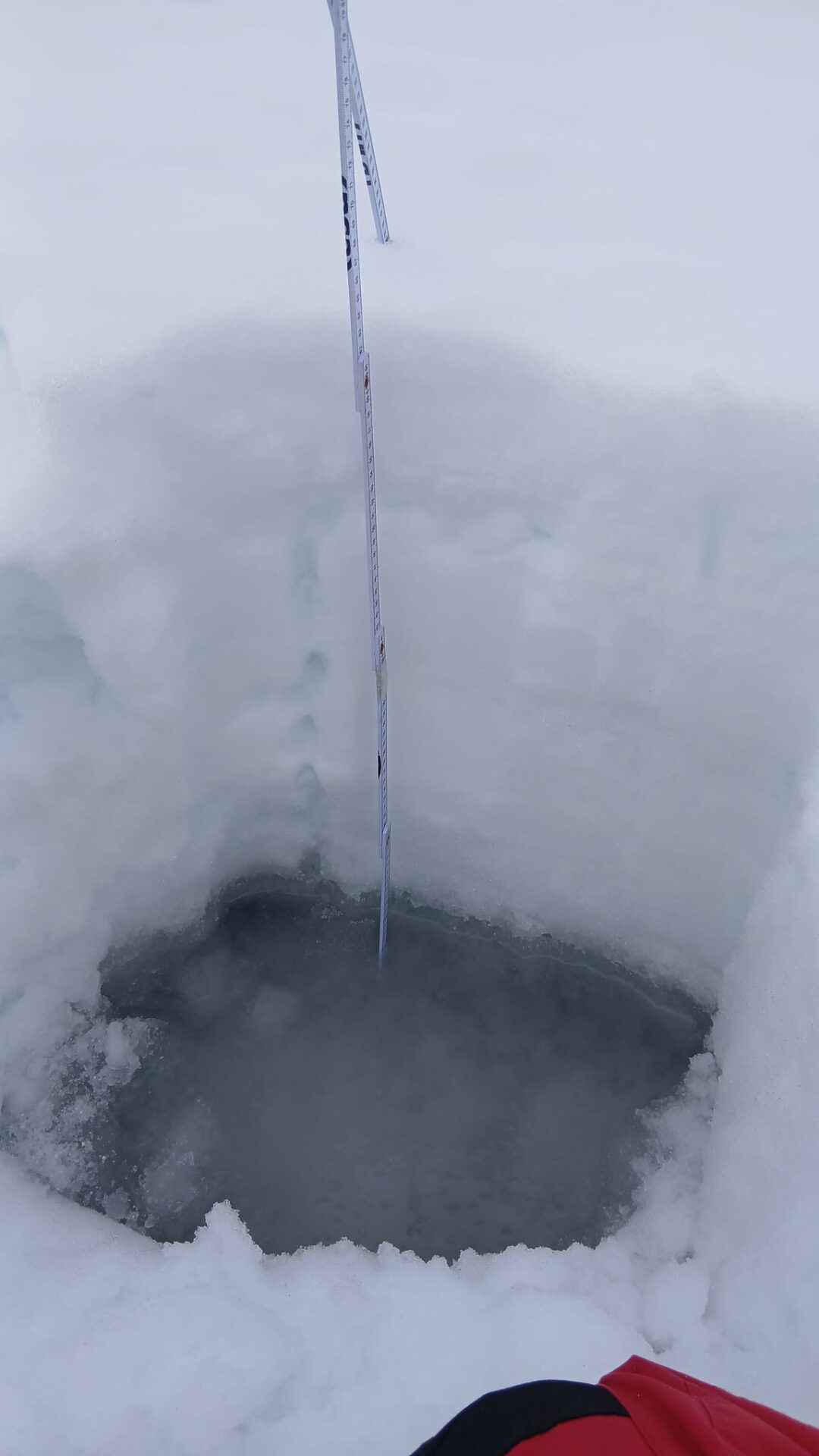
Snow pit in Ny Alesund
Photo credits: ISP CNR
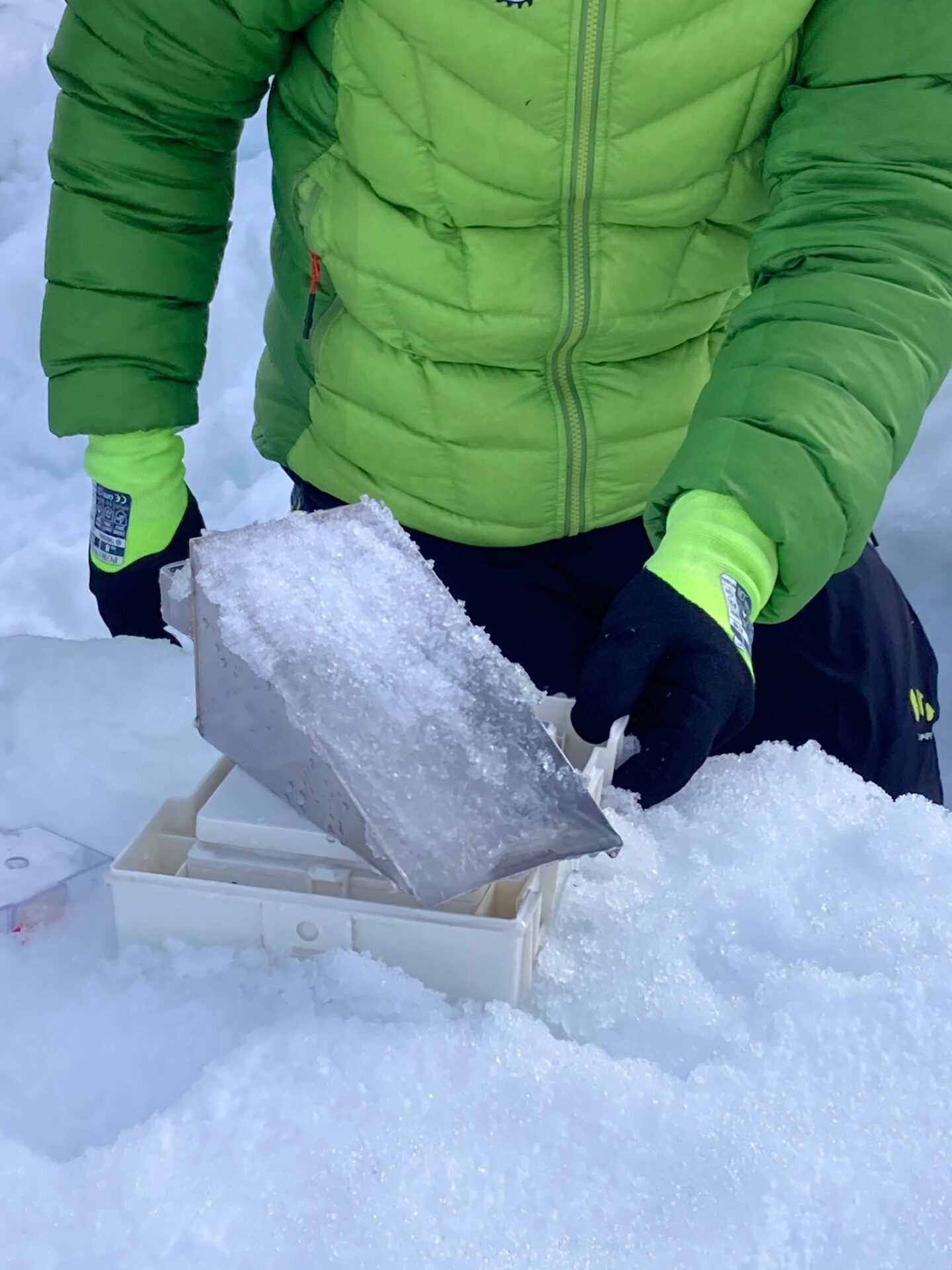
Measuring snow water equivalent near Ny Alesund
Photo credits: ISP CNR
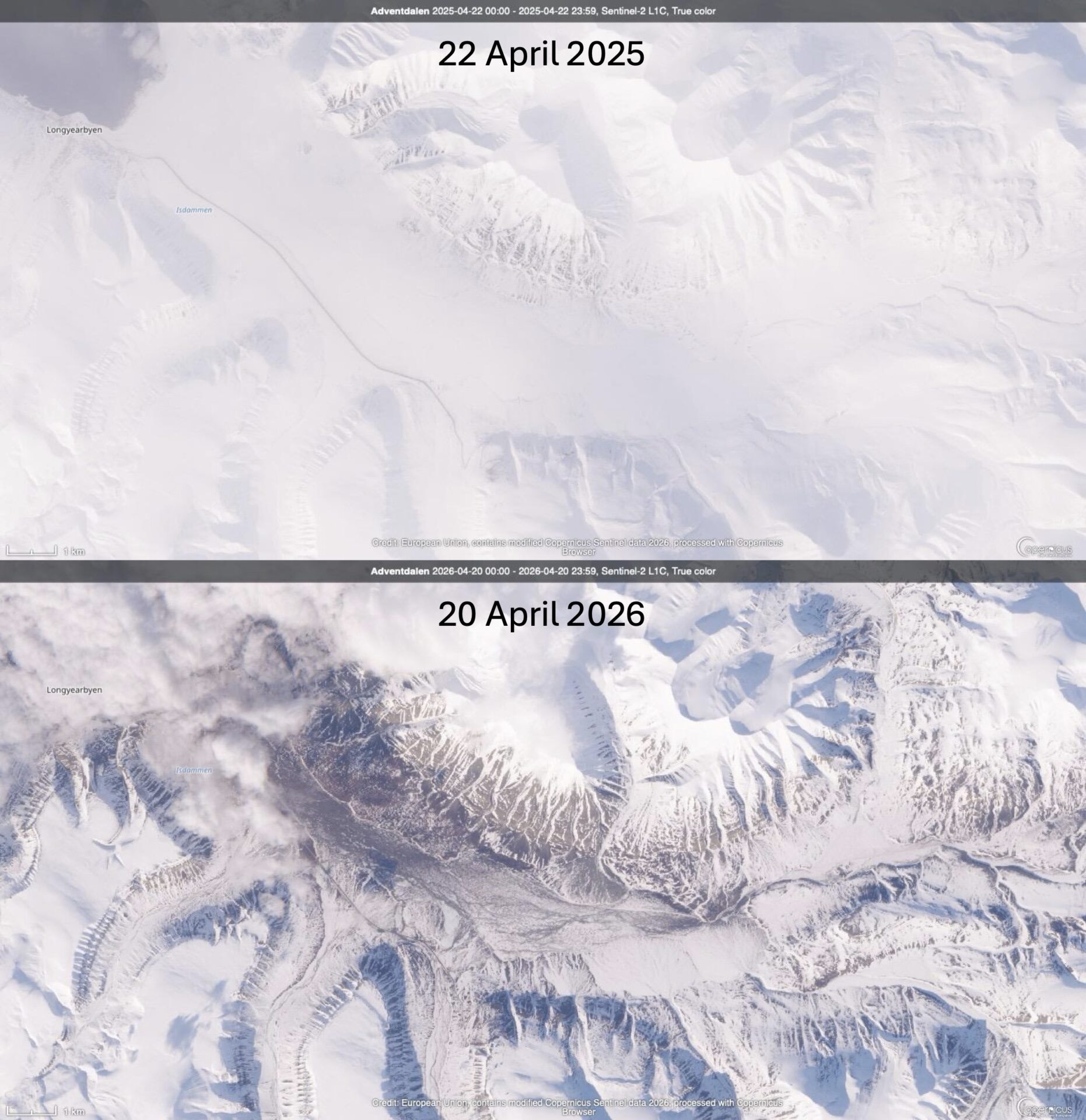
Comparison of snow cover in Adventdallen near Longyearbyen (Svalbard) in 2025 and 2026.
Prepared by Robert Ricker, NORCE
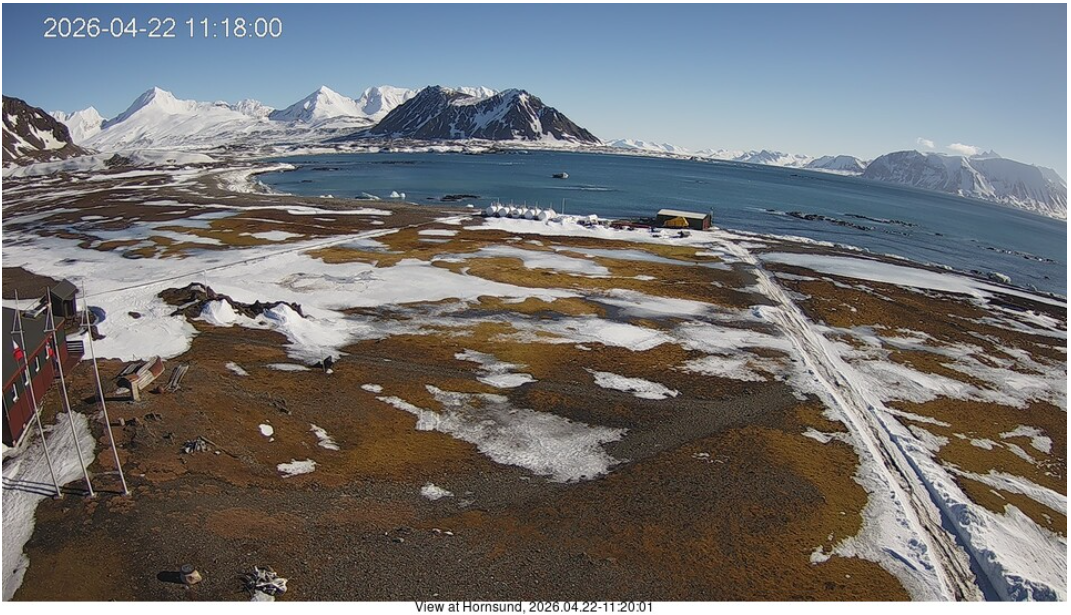
Webcam view at the Hornsund fjord from the Polish Polar Station on 22.04.2026
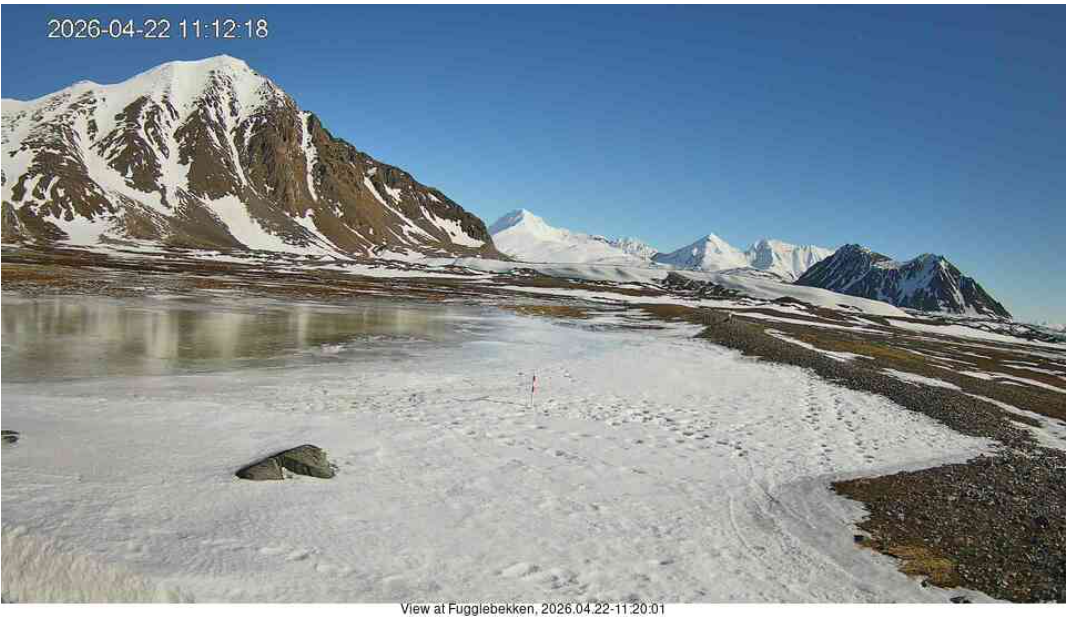
Webcam view at the Fugglebekken catchment near the Polish Polar Station Hornsund on 22.04.2026