We are pleased to announce a new scientific publication from the LIQUIDICE project:
“What Drives the Glacier Retreat, and How Do We See It? A Study of Measurement Methods and Environmental Drivers of Retreat in the Amundsenisen Glacial System, Svalbard”, published in the journal Remote Sensing.
Arctic glaciers are retreating at an accelerating pace, but understanding the magnitude and causes of these changes depends not only on environmental conditions but also on the methods used to measure them. This study investigates both aspects by examining glacier-front changes within the Amundsenisen Glacial System in Svalbard over a 47-year period (1975-2022).
The research focused on four outlet glaciers:
- Paierlbreen
- Austre Torellbreen
- Vestre Torellbreen
- Recherchebreen
All four glaciers share a common accumulation area, making them an ideal natural laboratory for investigating how individual glaciers respond to the same regional climate forcing.
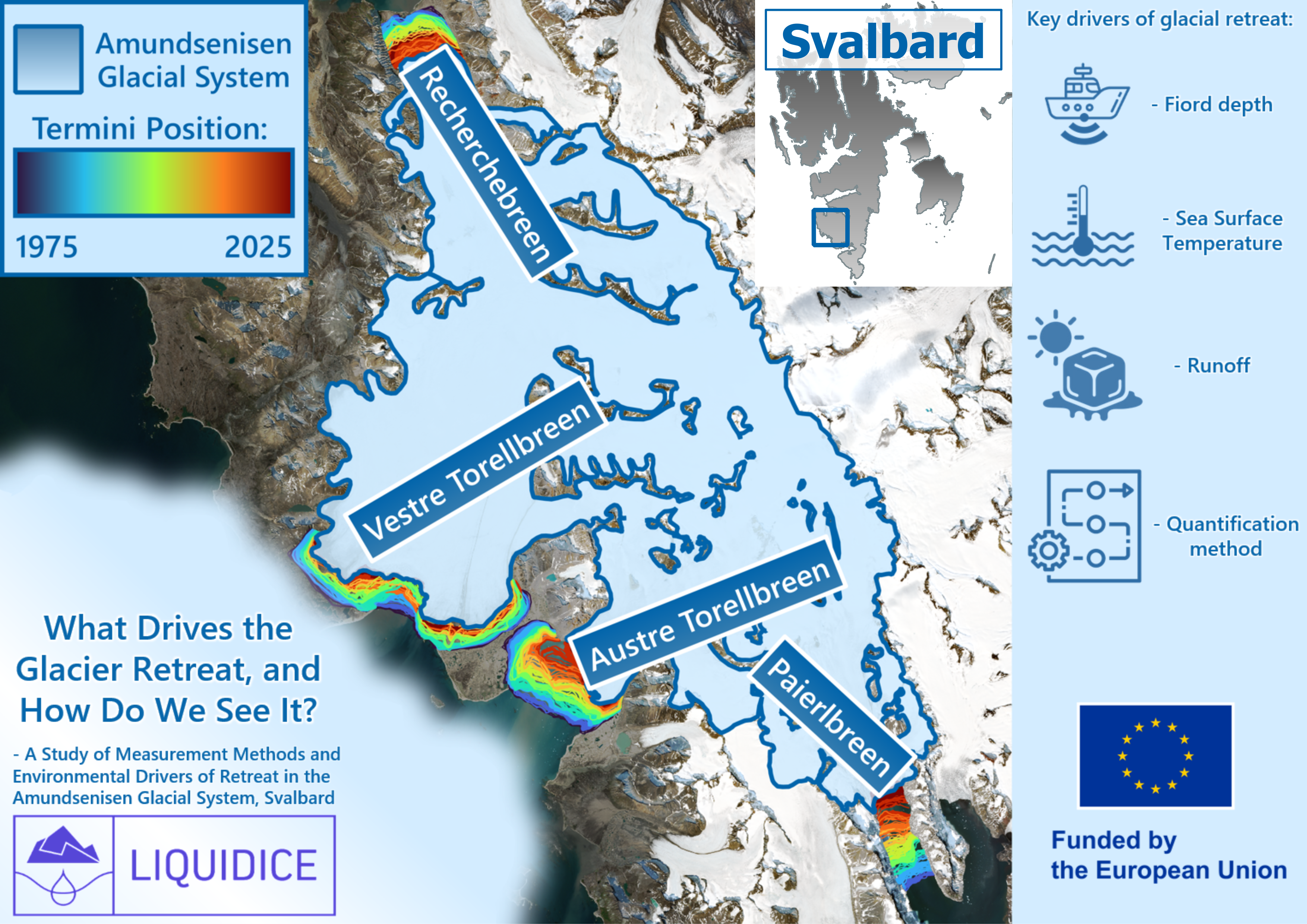
One of the main objectives of the study was to evaluate different methods used to quantify glacier terminus retreat. The researchers compared five approaches applied to the long-term record of Austre Torellbreen. The results demonstrate that method selection can significantly influence estimated retreat rates, especially in geometrically complex fjord settings.
The study identified the Curvilinear Box and Glacier Termini Tracking (GTT) methods as the most broadly applicable approaches for monitoring glacier-front changes, while the traditional Centreline method proved less suitable for short-term analyses.
What Drives Glacier Retreat?
The analysis explored the relationships between glacier-front changes and several environmental factors, including:
- Sea surface temperature (SST)
- Meltwater runoff
- Sea ice concentration
- Fjord bathymetry (water depth)
The results show that the response of glaciers to environmental forcing varies considerably, even within the same glacier system. Fjord depth and surge activity appear to play important roles in controlling glacier sensitivity to climatic and oceanographic conditions.
Marine-terminating fronts retreated on average about 3.4 times faster than land-terminating ones and were correlated with both SST and runoff. Land-terminating sections, which have no ocean contact, showed a weaker correlation with runoff.
Key Findings
- All four outlet glaciers experienced overall retreat between 1975 and 2022.
- Measurement method selection can substantially affect estimates of glacier retreat.
- Fjord depth and glacier surge cycles modulate glacier responses to environmental change.
- Marine-terminating glacier sectors retreat significantly faster than land-terminating sectors.
- Even glaciers exposed to the same regional climate forcing can respond differently to environmental drivers.
“Besides tracking climate change, an important part of glacier monitoring is choosing an appropriate method. The way we measure terminus change affects the results and how we interpret them.” – summarizes Dawid Saferna, first author.
The publication is available in open access:
🔗 https://doi.org/10.3390/rs18172886
This research contributes to a better understanding of glacier dynamics in the Arctic and highlights the importance of robust monitoring methods for assessing future changes in rapidly evolving glacier systems.
Authors: Dawid Saferna, Małgorzata Błaszczyk, and Mariusz Grabiec
Affiliation: Institute of Earth Sciences, University of Silesia in Katowice
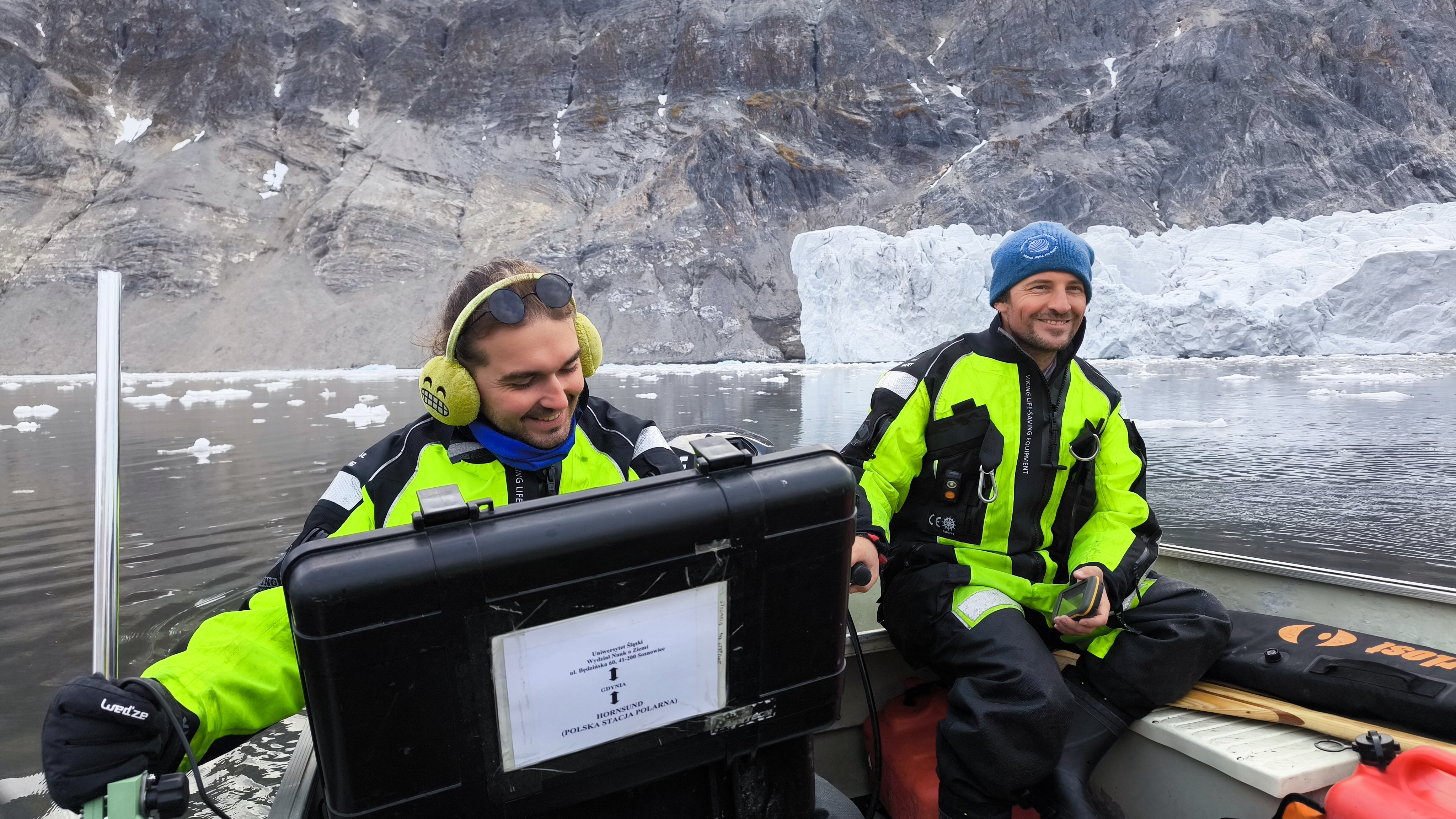
Photo credits: Natalia Łatacz, University of Silesia
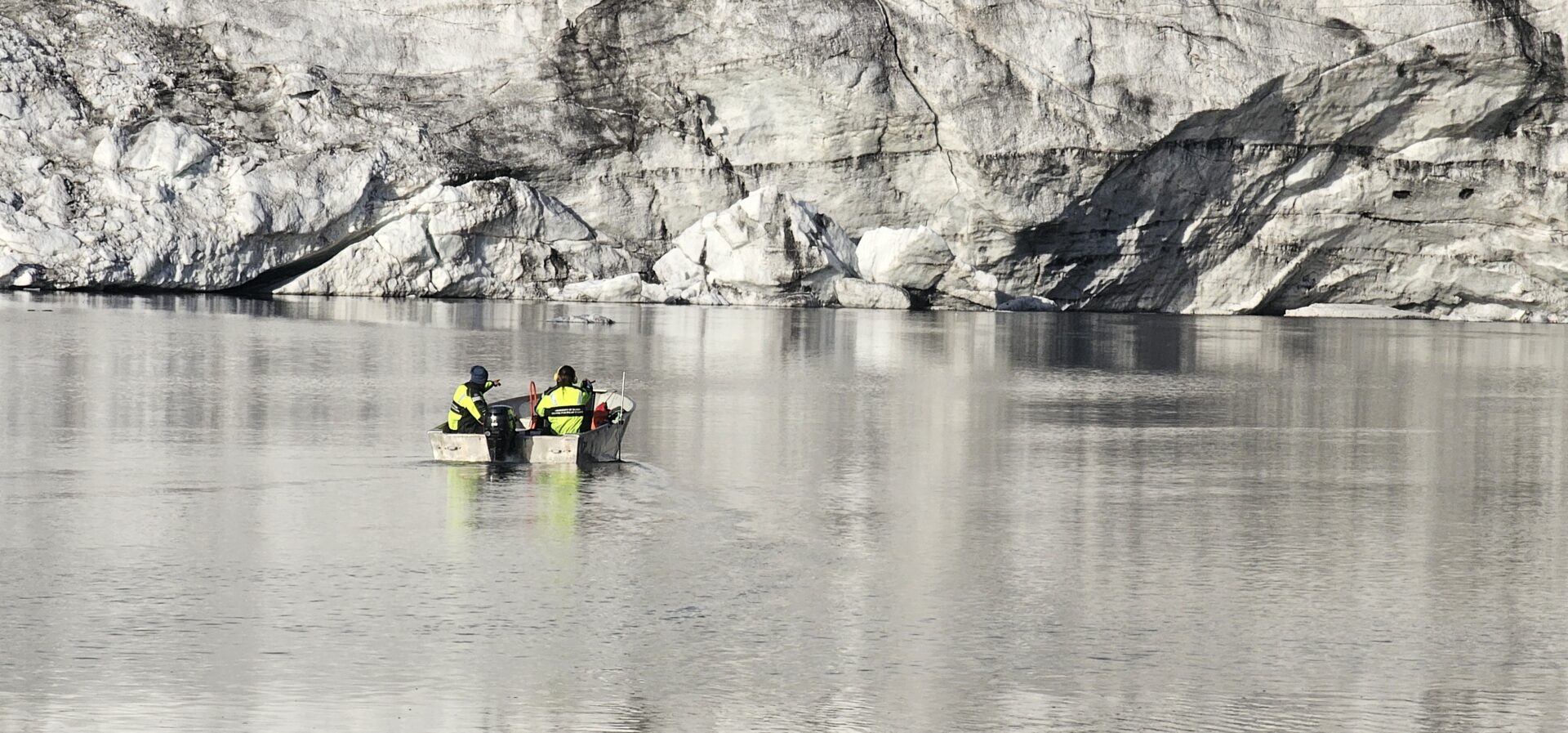
Photo credits: Katarzyna Stachniak, University of Silesia